Conversion of Forest Abbey into a new cultural hub in the heart of Brussels
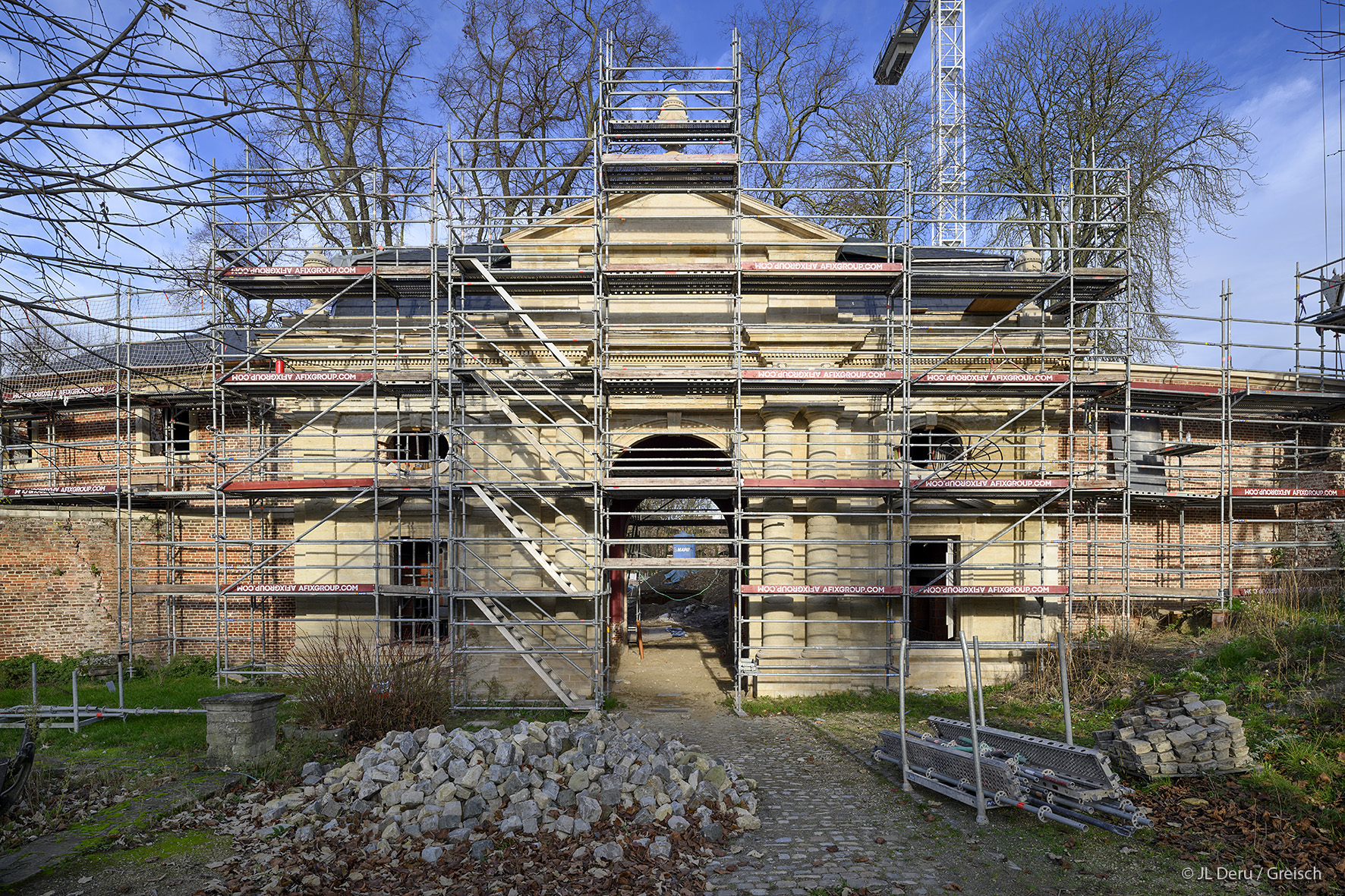
This large complex, covering 5,000 m² and dating from the second half of the 18th century, comprises the horseshoe-shaped abbey, its gardens, a church, and a «castle». It is becoming a cultural hub in the heart of the town. It houses the municipal library, the Academy of Music, Speech and Dance, the Forest cultural centre, the BRASS, the Forest Youth Centre, and the Municipal youth service.
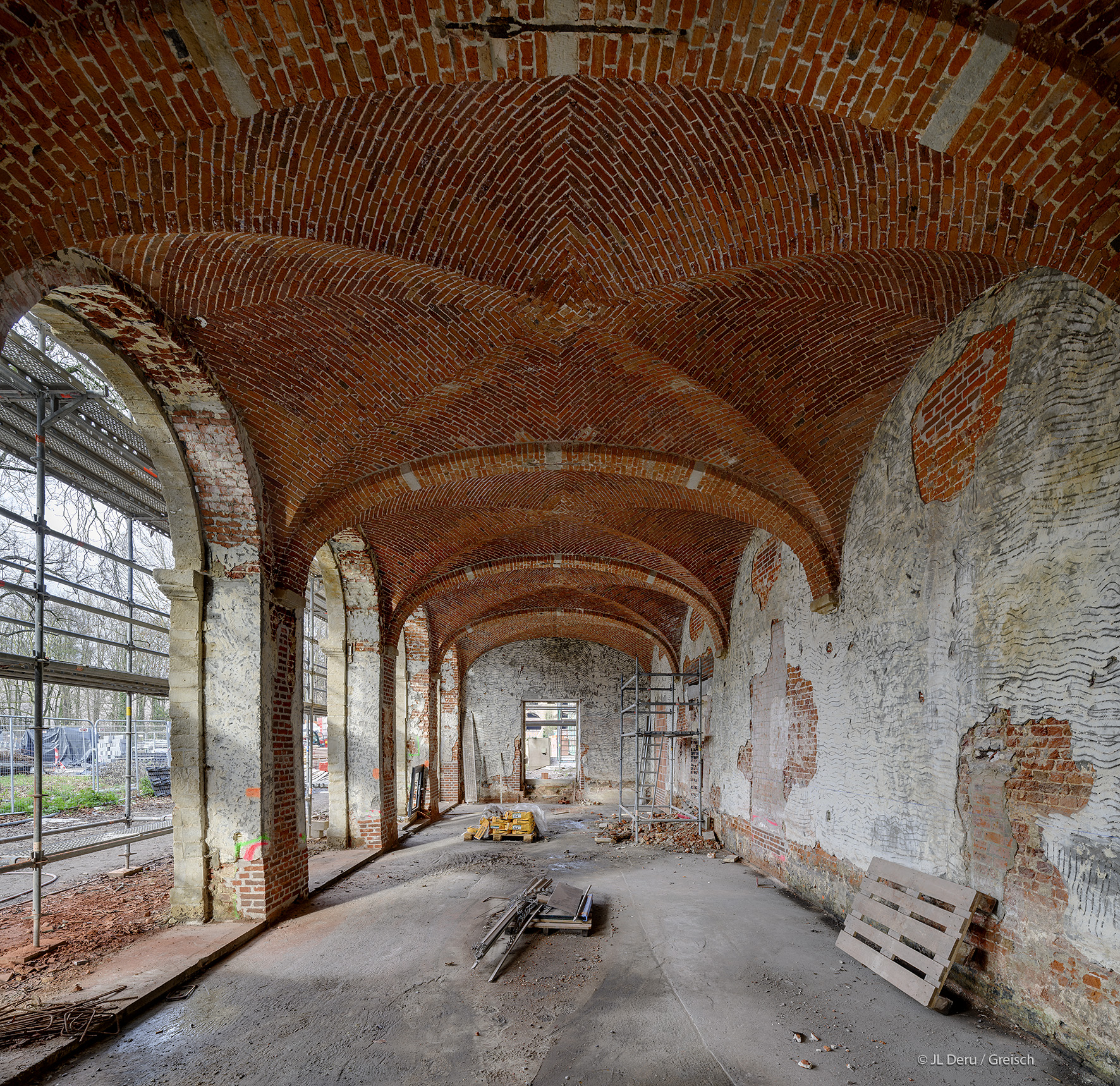
The restoration of listed buildings is part of an approach aimed at restoring the original exterior, whilst minimising the visual impact of the work. The building has undergone numerous transformations over the course of its various uses, some of which have irreparably weakened its structure. In the east wing, only one vault remained; a steel arch was therefore discreetly incorporated into the window frame to provide structural bracing for the building. The choice of materials that respect traditional building techniques – such as lime mortar rather than cement, slate roofing, and brass gutters – meets this requirement to preserve the heritage of the site and helps to restore its identity. A team of archaeologists is also permanently stationed at the site.
All the original timber frames have been assessed, and preservation and reinforcement work has been recommended. Where possible, the damaged or rotten parts are cut away and a graft secured with resin sticks is put in place;
this approach requires a regular presence on site as well as ongoing communication between the engineering office and the various parties involved, and the whole process is subject to the approval of the Directorate of Cultural Heritage.
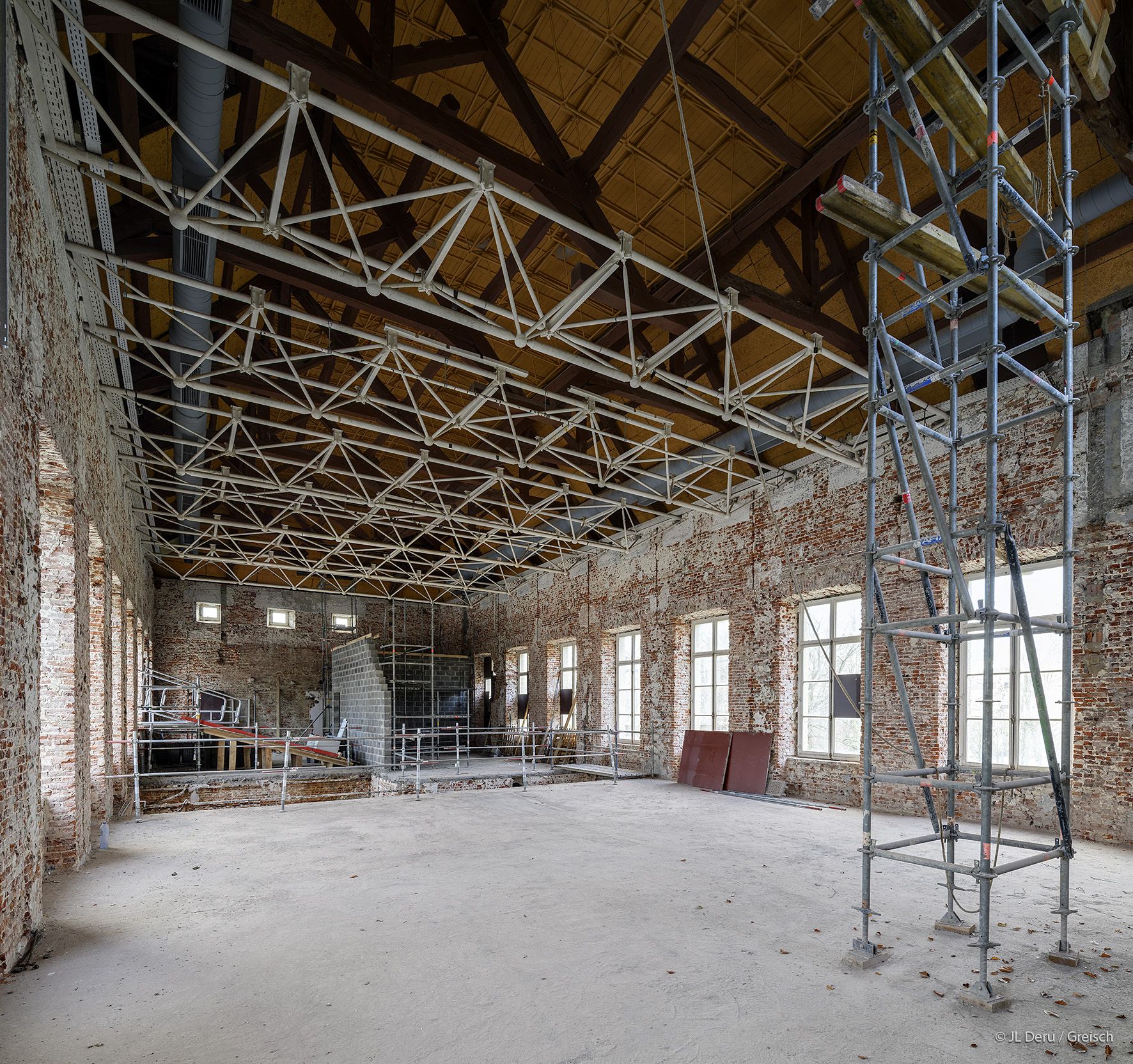
In the castle section, which has already undergone significant transformations, we are reinforcing and adding floors to accommodate dance halls and other multi-purpose spaces. A long-span steel trussed beam will be installed to open the space whilst supporting the original roof structure. Furthermore, to meet current standards, the stairwells have been doubled in size, from the cellars up to the second floor.
Finally, the library will be housed in a new building constructed specifically for that purpose. To make room, some houses were torn down, thereby restoring a sense of space on the site. As the water table lies just one metre below the surface, this building requires the construction of a watertight retaining wall using intersecting piles to enable localised lowering of the water table and the creation of a basement level.
Mission
Complete stability mission